
A large industrial canteen in China serves 3,000+ meals per day across two floors. The dining hall and dish collection area are on the ground floor, but the dishwashing room is on the second floor due to limited kitchen space at ground level.
Previously, staff manually pushed trolleys of dirty trays and bowls up the stairs. This caused heavy reliance on labor (8 dishroom staff just for transport), dish breakage around 5%, and frequent bottlenecks during peak lunch hours. The customer needed an automated way to move tableware between floors without manual carrying.
The LIWEISHI Solution
We designed a 5-component vertical dishwashing line that connects the ground-floor collection area directly to the second-floor washing room.
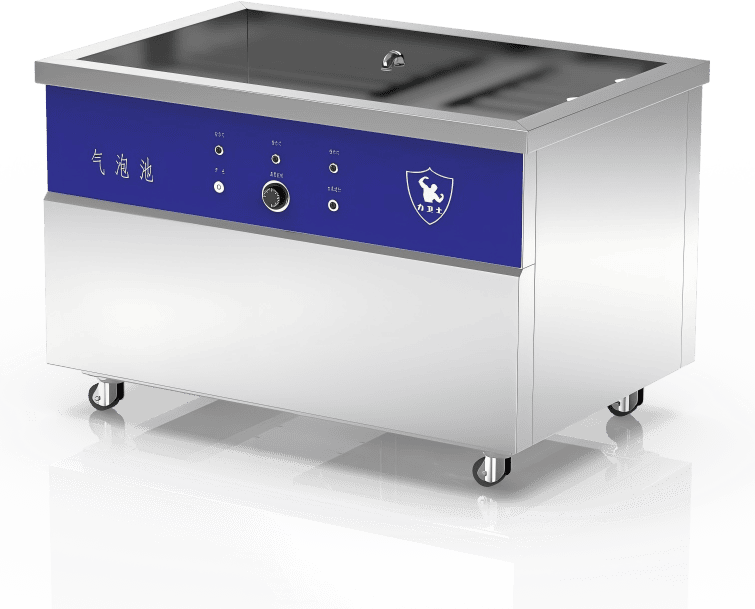
- Bubble Soaking Tank — Ground Floor
Dirty trays and bowls are first soaked in a stainless steel bubble tank. The air-bubble action loosens dried food residue — rice, oil, sauce — before the items enter the main washer. This pre-soak step shortens wash cycles and improves cleaning results on heavily soiled canteen ware.
- Sorting Machine — Ground Floor
After soaking, tableware moves along a conveyor to the sorting station. Staff scrape off remaining food waste and separate plates,bowls, trays, and cutlery into standard 500×500mm racks. Sorting here prevents jams downstream and ensures consistent wash quality.
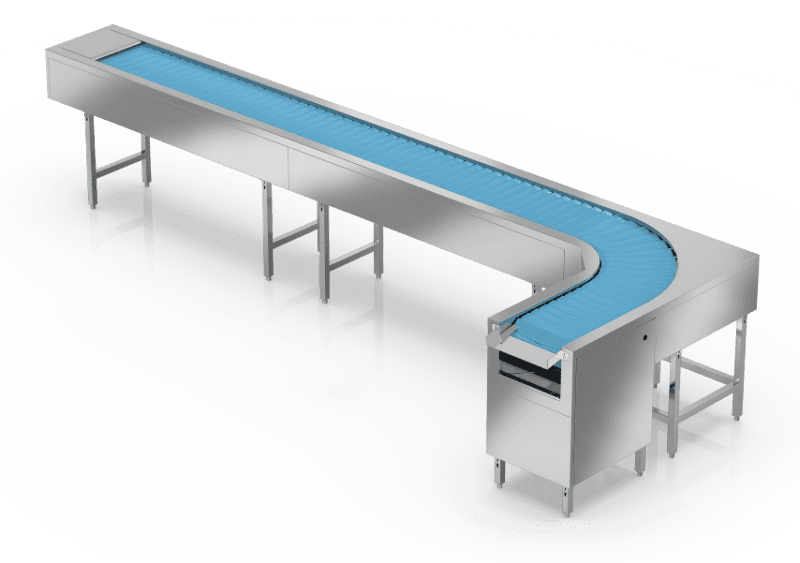
- Conveyor Belt
Filled racks travel on a stainless steel mesh belt conveyor from the sorting area toward the vertical lift. The belt speed is set to match the main dishwasher, creating a smooth continuous flow without piles or idle time
- Cargo Lift — Ground Floor to 2nd Floor
The conveyor feeds into a stainless steel vertical cargo lift that automatically transports racks up to the second-floor washing room. Safety interlocks prevent operation when doors are open. A second lift returns washed and sanitized racks back down to the ground floor for re-distribution.
- Main Dishwasher — Second Floor
On the second floor, racks enter the LIWEISHI LWS-XK60 flight-type conveyor dishwasher. It runs a three-stage cycle — pre-rinse (40–50°C), main wash (55–65°C with detergent), and final sanitizing rinse (85°C+). Capacity is up to 60 racks per hour, handling the canteen’s peak load across two lunch shifts.

Results After Installation
|
Metric
|
Before
|
After
|
|
Dishroom staff
|
8 people
|
3 people
|
|
Dish breakage rate
|
~5%
|
<1%
|
|
Peak throughput
|
Bottleneck at 1,800 meals
|
Smooth 3,000+ meals
|
|
Water & energy cost
|
Baseline
|
40% reduction
|


